Our Team

The CATIS Center is led by an interdisciplinary team of researchers and practitioners with expertise spanning cybersecurity, insurance, terrorism studies, engineering, mathematics, and public policy.

Jointly led by the University at Albany, SUNY and the University of Michigan, the team brings together deep technical knowledge, real-world operational experience, and a strong track record of collaboration with industry and government partners.

The CATIS leadership team has extensive experience collaborating with:

  • Insurance and reinsurance organizations
  • Government agencies and regulatory bodies
  • Critical infrastructure sectors
  • Defense and national security organizations
  • Industry research and analytics partners

These collaborations ensure that CATIS remains closely aligned with real-world challenges and evolving risk environments.

Center Leadership

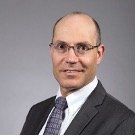
Unal Tatar

Unal Tatar, Ph.D.

Center Director | University at Albany

Dr. Tatar’s research focuses on cyber risk quantification, catastrophic and systemic cyber risk, and the intersection of cybersecurity with insurance and public policy. He has led multiple large-scale, multi-stakeholder research initiatives, including projects supported by the Department of Defense, the National Science Foundation (NSF), and the Society of Actuaries. Dr. Tatar is a research fellow with the National Association of Insurance Commissioners (NAIC) and prior to academia, he led Turkey’s national CERT and worked with NATO’s Centre of Excellence for Defense Against Terrorism.
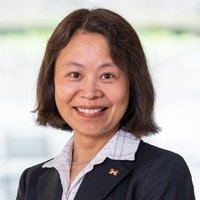
Mingyan Liu

Mingyan Liu, Ph.D.

Site Director | University of Michigan

Dr. Liu is the T. C. Chang Professor of Engineering and a professor of Electrical Engineering & Computer Science. She is internationally recognized for her work in sequential decision and learning theory, game theory, and incentive design, with applications to large-scale networked systems, cybersecurity and cyber risk quantification. Her research in predictive cyber risk analytics led to the development of the first global enterprise cybersecurity ratings system and a successful startup, later acquired by FICO. She has also led large research projects, including an ARO MURI. She is a Fellow of the IEEE and a member of the ACM.
Core Research Team

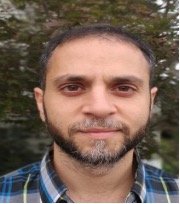
C. Ariel Pinto

C. Ariel Pinto, Ph.D.

Professor, Cybersecurity | University at Albany

Dr. Pinto specializes in cascading and systemic risk, infrastructure interdependencies, and resilience modeling. His work focuses on understanding how failures propagate across complex systems and how those risks can be quantified and managed.

Brian Nussbaum

Brian Nussbaum, Ph.D.

Associate Professor, Emergency Management & Homeland Security | University at Albany

Dr. Nussbaum’s work focuses on terrorism, cyber policy, intelligence, and threat assessment. He brings deep expertise in the intersection of national security, cyber threats, and terrorism risk, contributing to the center’s focus on emerging and hybrid risk landscapes.

Gary Ackerman

Gary Ackerman, Ph.D.

Professor, Emergency Management & Homeland Security | University at Albany

A founding leader in terrorism studies, Dr. Ackerman has extensive experience in unconventional threats and national security. He previously served as the Founding Director of the Unconventional Weapons and Technology Division at START, one of the leading terrorism research centers in the United States.

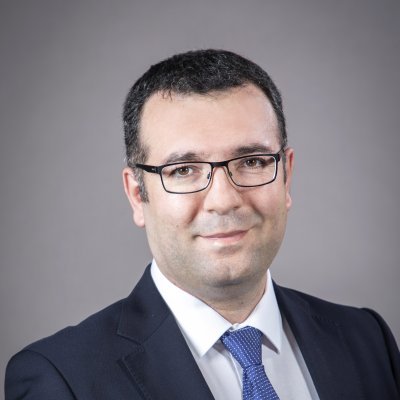
Asaf Cohen

Asaf Cohen, Ph.D.

Associate Professor, Mathematics | University of Michigan

Dr. Cohen’s work spans mathematical finance, actuarial science, machine learning, and model uncertainty. His research contributes to advanced risk modeling, uncertainty quantification, and insurance analytics.

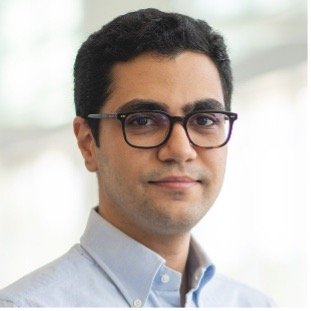
Armin Sarabi

Armin Sarabi, Ph.D.

Research Scientist, Electrical & Computer Engineering | University of Michigan

Dr. Sarabi’s research lies at the intersection of machine learning and internet security, including data-driven security, network measurement, and security economics. His work supports the development of scalable, data-informed cybersecurity risk models.