Today’s most complex risks cannot be addressed in isolation
The Cyber and Terrorism Insurance Studies (CATIS) Center is a proposed National Science Foundation (NSF) Industry–University Cooperative Research Center (IUCRC) focused on advancing the understanding, modeling, and insurability of catastrophic cyber and terrorism risks.
Jointly led by the University at Albany, SUNY and the University of Michigan, CATIS brings together academia, industry, and policy stakeholders to address some of the most complex and systemic risks facing today’s insurance ecosystem.
Today’s most complex risks cannot be addressed in isolation.
CATIS is dedicated to developing new tools, methodologies, and insights that improve how catastrophic cyber and terrorism risks are quantified, managed, and insured. Our mission is to:
Catastrophic cyber and terrorism risks are increasingly:
These risks cut across traditional boundaries, requiring collaboration between insurers, reinsurers, infrastructure operators, modelers, cybersecurity experts, and policymakers.
CATIS provides a structured platform to bring these perspectives together and develop solutions that no single organization can address alone.
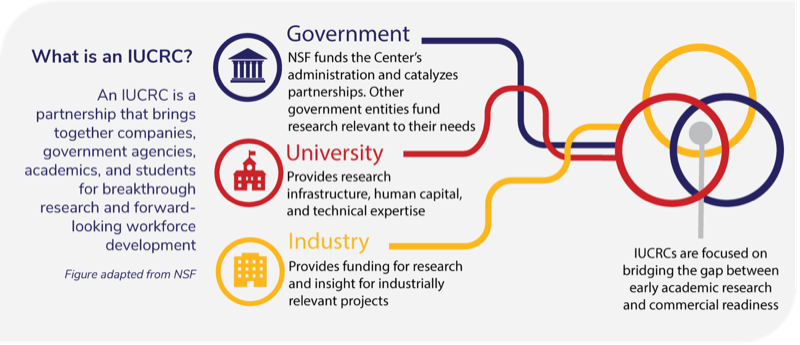
CATIS follows the NSF IUCRC model, where industry members play a central role in shaping the research agenda.
This model ensures that research is practical, actionable, and directly relevant to the evolving challenges of the insurance ecosystem.
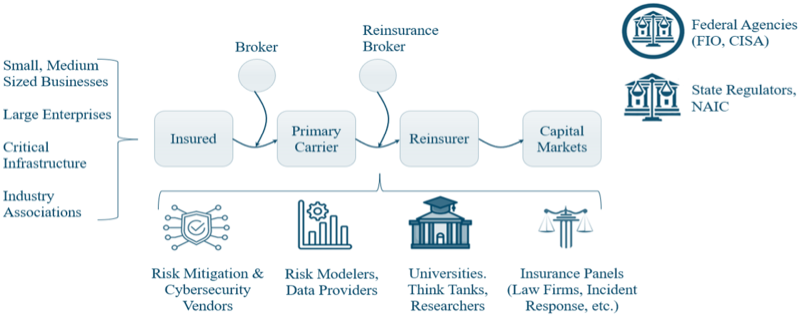
CATIS brings together a broad set of stakeholders across the cyber and terrorism insurance ecosystem.
This includes insurers, reinsurers, brokers, risk modeling firms, data analytics companies, cybersecurity vendors, incident response and law firms, policy and regulatory stakeholders, and critical infrastructure owners and operators.
Rather than focusing on a single segment of the market, CATIS is intentionally designed to operate across the full ecosystem.
Catastrophic cyber and terrorism risks do not sit within one sector. They cut across underwriting, modeling, cybersecurity practices, regulation, national security, resilience planning, and capital markets. Addressing these risks effectively requires coordination across all of these domains.
To reflect this, CATIS adopts a systems-level perspective. The figure below illustrates the interconnected stakeholders that shape the cyber and terrorism insurance landscape.
By engaging across this entire ecosystem, CATIS aims to improve alignment, reduce information gaps, and develop solutions that are practical, scalable, and relevant to all participants.
CATIS focuses on advancing research and solutions in areas such as:
CATIS is designed to serve as a national platform for innovation, collaboration, and impact.
By bringing together expertise across disciplines and sectors, the center aims to strengthen the foundations of cyber and terrorism risk insurance and support the development of more resilient, informed, and sustainable systems.